Showing posts with label Leadership. Show all posts

Thursday, 5 September 2013

Marianne Williamson on Relationship, Creativity, Leadership, and Divine Compensation


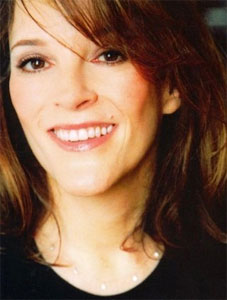
I hope I would look as gorgeous, fabulous and healthy as Marianne Williamson at the age of 61. She emanates wisdom and vitality. She is not afraid to speak fast or to wave her hand passionately - perhaps attesting to being peaceful does not mean you cannot be passionate as well. She advocates love, and an avid student and teacher of A Course of Miracles (ACIM).

There are 3 resources that I would like to share with you, my fellow reader:

1. Her "Return to Love" book, a classic.

I have a copy of this book "A Return To Love" by Marianne Williamson. Those who had looked at my worn and crumpled copy would think that I did not value it. But I love this book. And that is also why I carry it around and re-read it whenever I can.

Its lesson is very powerful. It reminds me to surrender, to forgive, to focus on now, to heal, to let go of fear and ego, to be peaceful and most of all, to love.

While its most famous quote is "Our deepest fear is not that we are inadequate.Our deepest fear is that we are powerful beyond measure. It is our light, not our darkness that most frightens us.", I really like the myriad of prayers offered in the book, especially in the times when I deviate from love.

Dear God, please help me. Heal my mind. Wherever my thoughts have strayed from love - if I've been controlling, manipulative, greedy, ambitious for myself - whatever it is , I'm willing to see this differently.

Dear God, you know, and I know, that I have more potential for neurosis in this area (relationship) than in any other. Please take my attraction, my thoughts and feelings about this person and use them for your purposes. Let this relationship unfold according to your will.


Dear God, let me see this person through your eyes. 

Dear God, please help me realize that I am someone wonderful. 

Dear God, please help me. This is it. Right here. There is where the sword enters my heart. This is where I blow it every time. 

Dear God, I surrender this situation to you. May it be used for your purposes. I ask only that my heart be open to give love and to receive love. May all the results unfold according to your will. 

2. Another powerful interview on relationship

There is a interview with Marianne Williamson on the topic of Shifting within our
relationship. You can access here in this link.

She touched on holy-isolation, in which two parties who separate can mean that the physical proximity is no longer the highest container for their mutual soul growth, and this is not a failure in relationship. Relationship is eternal - our bodies separate, minds are eternally connected. And it's our own path that we're asked to vigilantly monitor, not someone else's. This actually rings well with the teaching of Ho'oponopono.

3. Her video lectures.

Below is a video on YouTube where Marianne discuss on creativity, leadership and divine compensation at GoogleTalk. More video lectures can be find on her official website.

At around 35th minute, one of the audience brought into discussion about a belief that our actions do not really matter; what matter is our consciousness. Marianne was obviously quite appalled with that belief - It does not matter what we do? With 17 thousands children and 15 thousands adults starving to death everyday and billions of people living on $1.5 or less a day, there are so much things we can do.

Yes, spiritual study does not mean we just sit around, clear our consciousness and meditate. It also means to take action to give love. Namaste.

Sunday, 10 May 2009

A man who has been through a lot of hardship

When a thirty-years-old man share with you part of his life stories with tears in his eyes, some part of you will just melt down together with him, touched by how some people really have a hard life compared to you.

An Indian Muslim, Naz is a bankruptcy with eleven mouths to feed, which includes a wife and 9 kids. A entrepreneur himself, he ventured into several business and failed, mostly due to working with the wrong people. Now, he is still in a business but struggling with limited capitals and resources.

As a newcomer to our business-sharing group, he was telling us his stories with great self-containment from the embarrassment and the fear of being laughed at or treated with disrespect. But in our group led by Jeff, laughing at people's plight and acting disrespectful are not condoned at all.

Naz told us the times where he had delivered excellent performance in most of his jobs. In one of his jobs, we managed to sell all the bricks which has been in the company inventories for more than 1 year and he had managed to sell it all in less than 3 months. From 3 lorries to transport the bricks, he made it into 16 lorries in that 3 months. Despite his outstanding performance, he realized he would not be given any chances to move up the corporate ladder. That is because the boss and majority of the people in the company are of different races, and having another race to head them with be unacceptable. Such is the world. Thus, he talked to his boss and decided to give up the job, taking with him, approximately RM 68,000 as the commission and pay for the short 3 months. With that money, he started his own business.

Unfortunately he did not make it. Soon, another acquantaince asked him to help him in his business as a partner. He worked day and night, clocking in at 7 am until 12 midnight almost everyday. Soon, he grew the company into a lucrative business in a relatively short term of times. Because he is a bankruptcy, during the start of his work, he was not able to formalize any documentation to declare his ownership on part of the company shares, a major mistake that would soon caused him to lose everything he had achieved in the company. When he approached his so-called business partner to request to put his wife name in the company share, he was terminated the very next day. Since then, he had been in a legal lawsuit with that company, seeking the help of the worker union. That was 3 years ago. But many were lost and he had not been able to recovered for years. However, by fate, it was that lawsuit that brought him to us after 3 years. Though a broken and tired man, he was ready to be 'mold' and transformed.

He said each day, he have to pretend to be happy even though he have a lot of things to worry about to keep his family afloat. Just imagine someone trying to kick and swim with water just under his nose for years, pulling 10 others with him. Naz's eldest son, a 15-year-old, have to work on the weekend despite a major PMR exam coming soon. His family eat happily at every meals even though that usually consisted of just rice and eggs.

Though facing tremendous hardship and on the verge of giving up, I feel Naz is desperate for a break in life now and he will put all his life to make it for the maybe one last time. Not only he is answerable to himself, he has to face 9 little faces and the woman he love, whose future are unknown, but who have never leave him despite the hardship.

By good chance, he met a good person in the worker union who is not only helpful to him, but who also believe in his capabilities and potential. That person in the worker union is a long buddy of Jeff and who is also in the business group. So, that is how we met Naz.

I want to share this story because I learn that most people who achieve great things in life, are the same people who at one times, are so broken and fail so many times that they may not even be able to go through life without the help from some good samaritans, who respect them despite their failures and willing to lift them up. But, of course, eventually, it also depends on abilities to work through the hardship and their persistences.

Previously, in my 29 years before I met Jeff, I rarely meet people has been through great hardship in life, except maybe my parents. But since one year ago, I found myself meeting and learning from a lot of people who have great misfortunes in their life. All of them would tell their stories with glimpses of tears in their eyes and some even broke down and really cry. Sadly, not all those people are able to change or break through from repeating their mistakes. But I learn the turning point is when a person is willing and ready for a 180 degree change. They may need to learn something that are so foreign to them that they may have a sense of feeling that they are learning from an alien. Of course, this is not easy and it is not something that can be achieved in months, but it is usually in years. All one needs is the opportunity to be trained, able to accept new things and persistently make changes or adjustment.

I ponder on this question:

If Naz is to know in 4 years ago that he will go through these 4 years of hardship when he starts to venture out in his own business, taking a big turn in his career, will he reconsider not to do that?

Maybe.

But, what if, in his next 1 or 2 years, he not only can recover from his lost, but he can have a chance to be a really successful business man and financially free?

That, we all do not know what his future will look like.

But I think he can make it because he has already shown a lot of courage and persistence for a man to first move into his own business and has not given up until now. And that is what I respect and admire in people, not the status or how rich he is, but this -
though sometimes weakened, but an undying spirit in a man (or woman) to excel in life.

Thursday, 2 October 2008

Five effective actions for solving a corporate conflict

In a corporate world, there are bound to be conflicts and miscommunication between different parties or organizations. When problems occur, finger pointing is not the logical response of solving the problems itself.

However, most resort to such behavior, often overwhelmed by emotions such as anger, frustration, distrust, prideful, and so on. This results in bad feeling in the air for both parties and keep people away from solving the issues at hand which are the objectives.

Recently, I am able to witness a corporate conflict involving a vendor and a dealer. Jeffrey’s help was engaged to solve this conflict. Thus, I have a valuable chance to see and learn how to solve this problem in an efficient manner. Since this is a real incident for corporate environment, I would use fictitious names to preserve the anonymity of the parties involved.

Johnny, the dealer, gets a project to supply products and services, consisting of software and hardware, as well as training and support services to a customer. The customer gives the project to Johnny because of his good experience and reputation in the industry. However, Johnny does not produces the products himself so he sources the products from a vendor company XXX whom he was previously working for. Johnny has some rough experiences with the vendor company before, especially with Eddie, the superior of the sales manager who is managing his deal. Eddie was also his ex superior in XXX.

He was dealing very well with the vendor so far in getting the products and services delivered to the customers. However, in the third purchase, the vendor not only raises the price of the products but also decides to not supply to Johnny anymore. Hence, Johnny faces the risk of not fulfilling his customer’s orders, breaking the customer trust and also ruining his reputation in the industry. In summary, he is in dire state.

When dealing with conflicts, it is important that we keep the following five actions in mind:

1. Stay focus on the subject. Do not deviate. Do not get clouded by emotion.

Since Johnny has some bad experiences with Eddie before, he is filled with frustration and anger. Instead of trying to understanding the other side of the stories and solving the problems, he keeps on thinking that Eddie is making things hard for him on purpose to get back at him.

When Jeffrey talks to Eddie, it is found that the reason why Eddie does not supply to Johnny is that Johnny has not settled the earlier two payments. Johnny argues that he cannot settle the payment yet because the customer does not want to pay him until the implementation is fully completed. The customer complains some features are not in the system and the last training cause their staffs to enter wrong data into the system. Thus to the customers, the implementation is not fully completed yet.

Eddie argues on his side, he has delivered fully and should get the payment. Due to his company policy, Eddie cannot continue to supply to Johnny if he cannot clear the payment. To Eddie, he is only dealing with Johnny and not Johnny’s customer, so Johnny needs to settle the payment regardless whether the customer has paid him or not. Eddie also admits his subordinate has previously given the wrong quotation and which cause him to re-adjust the pricing on the third purchase.

Thus, in staying focus on the subject, on business ground instead of personal matters, we now know the only way to solve the problem is to pay Eddie and quickly get him to fulfill the third orders. The other matters are histories.

2. Present things in a pleasant manner.

When Jeffrey presents the issues and prompts both parties to talk, he avoids having both parties finger-pointing at each other. Instead of focusing on “me” and “you”, he focus on the powerful word – “WE”. In many cases, he emphasizes that “WE” are doing business here and the deals are beneficial to both parties. So, “WE” should solve the problems together instead of harping on who is at fault or on the past issues like bad services, wrong pricing, etc. “WE” is A VERY POWERFUL WORD.

3. Keep a non-tempered and cool composure.

Confronting the problem on hand, Johnny is very frustrated and angry since the beginning. To him, Eddie and his teams have not delivered a very good service to him and his customers. And this is the cause that the customer is not paying him. Thus, he is unable to pay Eddie’s company. On the other hand, Jeffrey tries to keep the situation in a cool manner by not delving too much into these issues. He asks Johnny to calm down and remind him being angry does not serve any purpose. Several times, when Johnny gets into an angry tone when talking about his pain, Jeffrey asked him to pause and talk slowly to keep him in a cool composure.

4. Discuss on problem-solving and future co-operation issues and also channels of communication.

After understanding the issue, it is obvious that the most important issue to attend to is to continue to provide the customers with the products and then prompt the customer to make payment. Although Johnny has not get the payment from the customers, he must pay Eddie for his company to continue provide the products first. In the future, Johnny needs to be careful in managing the customer expectations and also service delivery by the vendors. Johnny may also take over the training and support services from Eddie’s team so that he can provides better support to the customer if he wants to.

Johnny, being the middle man and consultants in the deal has to bear the responsibilities in keeping both parties (vendors and customers) happy at all times.

(Up until now, I always think being a dealer is a simple job of getting the supplies and delivering to the customers. But the fact is a dealer has to take the double pains from both the vendors and the customers. He also has to bear any risks of any parties not doing their jobs well enough)

Since Eddie admits one of his sub-ordinates has made the mistake in the quotation and thus creates all the confusion, he agrees to remove him from the future correspondence. Eddie will assign another sales manager to handle this deal in the future.

5. Provide a compromising situation for both parties for future collaboration.

After getting each parties to understand what needs to be done immediately to solve the issue, Jeffrey goes on to discuss what it is like for future collaboration to prevent the same problems from happening again. There may be more deals between both parties in the future and they need to learn how to work closely.


What I know is Johnny certainly has a lot to learn from his mistakes in this conflict. He need to start by practicing the 3 principles in doing everything in life.

And you know what? Jeffrey bought some of Johnny’s share in his company and the deal was sealed. Eddie was very surprised that Jeffrey, who actually owned the company, was logical and not single sided in handling the matter.

Thus, what we have learned today? Ask yourself….

Saturday, 9 August 2008

Do you want to become a Hero or a Zero?

I am not going to compare between Batman and The Joker (the villain, in the latest Batman movie, The Dark Knight). I would not say heroes as just those people who are noted for courageous and noble purpose, especially those who risked and sacrificed their lives. And I would not say a zero is a nonentity, one having no influence or importance. I think everyone would have some sort of influences or importance.

I mean the heroes and zeroes whom we meet daily, even the hero and zero entities that are both inside us depending on how and when we want to use it.

In life, I do not think hero and zero are easily identified as Batman and The Joker. That is why my most unforgettable hero and zero from the movies are not the conventional iconic figures. To me, a hero or zero emerges when one is in danger. A hero will rise to the occasion and do the right things regardless of how afraid he is in the painful situation. A zero will flunk or run away when there are pressures and crisis.

In the popular Saving Private Ryan (1998) movie, I always remember this character, Upham. Upham is a translator who had never seen any fighting and killing action before the mission. He was supposed to carry ammunition to his comrades. But he lost his nerve amidst the shooting. Frozen on a stairway just beyond the reach from his comrades, he did nothing when one of his comrades was brutally killed by a German solder just a few steps away. It was the most excruciating scene as the German soldier slowly drove his bayonet into the heart of one of his comrades. At that split second, we all know Upham would have save his comrade just by being there and maybe just as much as given the German a kick. And we all wanted so much to shoot Upham himself at that moment for his cowardice. When the German left and approached Upham, he was so in shock that he took his hand off his rifle’s trigger. Surprisingly, the German left him alive; maybe thinking a coward like that is not worth the time to kill him. In the final twist of fate, when the Germans surrendered, Upham pointed his rifle at the group as if he was a “brave” soldier. He even went further to shoot at one of them, when he realized he was the one who killed his comrades, the comrades who would not be dead if he had done something. The stinging realization that really beat me every time I think about this is that Upham would return to his home, not only alive even though he caused the death of his comrades, but he would also be celebrated as a hero. It is something that I really do not want to accept. My epiphany from this story is no matter how “pure” or “innocent” one might be, that does not allow him to be irresponsible, be a coward and have a bad judgment especially when the situation is critical and calls for him to act.

I certainly would not go near Upham, least become his comrade. To me, Upham is the ZERO, real total ZERO. He did not act when he was most needed to.


Ironically, in the movie Hero (1992), a cynical and amoral man, named Bernie, did a noble thing by rescuing the passengers from a crashed airliner, only to see someone else take credit and have no one believing he was the true hero. Although, Bernie was not really likeable in generals, but he took the right action when he was required to do it, even though at that time, he did not really seem to know or care what he was doing.

To me, Bernie is a hero even though he is not a nice guy.

I learnt from my experience that Mr. Nice Guy can be more evil and he usually hurts us behind our backs while Mr. Bad Guy can be the one who comes to help and save us when we most need it.

How do you know if you act like a Zero?

Through my own experiences and observations as well as experiences of others which are mostly painful, the following behaviors are found in the zeroes:

1. They do not want to admit their own mistakes, either because they are too prideful or they are afraid to face the consequences or punishment. Or, maybe they are scared of how other people will view them when their mistakes are known.

These are the few variation of the behaviors:
a. They do not apologize.
b. They may apologize when they are pressurized into doing it even though they do not realize or admit their mistakes.
c. When they apologize, they never commit to improve or prevent the same things from happening again.
d. They only apologize to the person who confront them about their mistake(s), but not to the rest who also deserve the same apology.
e. Even when they apologize, they make some excuses to try to put the blame to someone else, some other things or circumstances, maybe like the wind, the rain, etc.

2. They tend to play stupid games behind the back and appear to be innocent and nice at the front. They do not dare to compete head-on because they are usually incapable and stupid. Moreover, they are easily threatened by people, who are smarter and more capable than them, especially if the smarter guys are younger too.

3. They always want to avoid conflict. This is also driven by the fact they do not want to admit their mistakes (point #1) and cannot compete head-on (point #2). Instead of trying to resolve the conflict by open talks, they pretend to be fine but keep the revenge or judgment at heart.

4. They do not face their lives and take action. They always give themselves excuses not to act. They always want to wait for something to happen, and then only they act. They want to wait when the path is totally cleared from the mist, and then only they can start walking their life. For most of them, they are still waiting until the final breath of their lives.

5. They always want to play it safe. They do not want to take risks. They always have thousands of reasons why the risks are not worth taking at all, especially when they try to take care of all the people and their opinions in the world.

6. They do not want to get out of their comfort zones. It is always same paths, same mistakes, same faces and same stories over and over again.

7. They are doubtful when good things happen to them or when people offer them good things. So, sometimes, they just reject the good things or people. They continue to push them further and further away from them.

8. They feel embarrassed and ashamed more easily. They always avoid being open. They are usually not assertive because they usually say things in a vague way and like to drop hints. This is intended to create the leeway in case they say something wrong.

9. They always give up on things. They start things without knowing the goals or objectives they want to achieve. They are not persistent enough to pull through until they reach the finishing line. Sometimes, they just give up even though they are only just an inch to getting what they want.

10. They like to follow the crowds. Instead of following the successful people or people who have made it, they use the failures of others as a reference to limit themselves. For e.g., Andy sees a lot of sales person in his group of friends who are not doing very well and come to a conclusion that he should not go into sales.
On the other hand, they might follow the crowds to do something even without knowing what are their strengths and weaknesses. In the “Saving Private Ryan” movie, Upham should not have taken the job. Do not take the fighter job if you are not a fighter.

Of course, there are a lot of ways to overcome the Zero in us to emerge as a hero. This is done not for all the people in this world, but mostly for ourselves. The measures are, of course, to avoid all those that have been said above.

"Live as brave men; and if fortune is adverse, front its blows with brave hearts." - Cicero

Captain Miller famous quotes From Saving Private Ryan: "Ryan...I don't know anything about Ryan. I don't care. Man means nothin' to me. It's just a name. But if...you know....if going to Ramel and finding him so he can go home, if that earns me the right to get back to my wife....well, then, then that's my mission."
Friday, 7 March 2008

4 prerequisites for being a Consultant

Every business has problems. Everyone has problems. Would it not be nice if we can pay someone to look into our problems and solve them for us? Would it not make our life much easier to live by everyday? That is provided if we can find such people who are willing and capable enough to do the jobs for us with a price tag of maybe our house or our latest Ferrari.

That is what consultants do. And, of course, the cost to do the job also. A consultant, in generic term, is a professional who provides advice in a particular area of expertise, for e.g. in business, management.


It maybe suffices for me to say, consultant is just providing advice and not really need to get their hands dirty by actually doing the job. But I have seen the most efficient consultant in the world (at least, in the world that I have seen) who really gets his hands dirty and able to execute every jobs perfectly. The load of his job are easily the jobs of 3 senior managers combined. And he is one crazy consultant, so let's call him C.C. for now.

C.C. inspired me to define consultants differently. They are those who knows what people needs and what they need to do, and they get it done, no matter what. No matter what. Period. There are simply no excuses for failure. After all, who will trust a consultant who can talk and advice, but who never really have done the job before.

C.C. is also the most efficient and knowledgable people I ever seen in my life. I mean the real efficient one. There are those who call themselves consultants but not living up to the title at all. I came across some business consultants, project consultants that just are NOT consultants.

For that, I treat C.C. as my role model and I long to become near as good as him someday.

Thanks to him, I start to understand the consultant style of doing things. In one of the sales training session conducted by C.C, he spoke of this:

Sell solutions, not sell the products.
Sell in a consultant way.
Do not have the salesman mentality , more like consultant mentality.

Let's put it this way, while normal salesman approach the customers and start to sell their company and products by telling about the good features and benefits, the consultant approach the customers and ask them what are their problems. Then they provide solutions to solve their problems. The solutions normally include their products and services. Otherwise, they can always work with other business associates.

While you might be tempted to become a consultant, here are the 4 prerequisites C.C. told me where one should look into:

1. Presales

A consultant should know the product inside out. A good understanding of the product and business is very important.

2. Public Relation
A consultant holds the role of a key account manager. Thus, he must have very good people-skill and very well-versed in sociology.

3. Analytically strong
A strong analytical mind is the key asset of a consultant. A consultant must analyze everything, the budgets, the values and potential of the business, assistance needed, potential hurdles,etc. These are done based on experience and situation.

4. Detailed
A consultant must have a keen sense of awareness of small things and situation and opportunities. He is also detailed in observing the reactions of people. He has to come out with a complete solution thinking, detailing every single steps from A-Z, coming out with the fail-safe or backup plan.

Thursday, 25 October 2007

The first hundred days

I am reading the book "You're in Charge - Now What?" now in preparation for my new job. This book is a gift from my boss which I consider to be valuable.

Although the author has used the CEO job as examples, there are many things that we all can learn. For one thing, we need to realize that the first hundred days in our new job are the most important. It was the time when we are in the temporary state of incompetence, faced with being the person who know least about the company. But it is also the most important period for one to lay the groundwork for a long-term momentum and great performance.

I think this should be the first thing we hear when we start a new job. "Congratulations, you got the job, now you have to earn it."

Below is a memo sent by the managing partner of McKinsey Company to the new recruits when they started. He sent a very strong message that day. Coincidentally, I was born in that same month. :)

To: New Associates
From: Ron Daniel
Date: April 1979

On Becoming An Associate


It has been traditional for the firm's managing director to write to all new associates. It is difficult to personalize such a communication, but through this memorandum I would like to add
my welcome to you as you join the firm. My purpose is to convey a few ideas that I think are important. These ideas are largely personal, no matters of firm policy, and are offered for whatever value they may have for you.

The first concept has to do with a basic attitude that I believe can significantly affect the satisfaction and fulfillment you will derive from your work. I urge you to think of yourself from this day on as a member of our firm, not as an employee of it. This is your firm, and you should
assume a proprietary state of mind toward it. In many ways, the kind of firm McKinsey & Company is five years from now will be the result of your interests, your convictions, and your energies.

Secondly, recognize the necessity of getting off to a good start in the firm. Your first few engagements are critical. During these studies, you can establish an internal clientele for yourself - that is, by performing in an outstanding way, your reputation will be quickly established in your office and even the firm. If you are successful, you will be sought out by your colleagues when new engagement opportunities come along. New responsibilities will flow to you. You can overcome a poor start, of course, but it takes considerable time and effort - and obviously it is better not to have to rebuild professional standing, but, rather, to continuously add to it.


Our firm has a
long history that, among other things, has left us with a well-established value system. The professional approach, the one-firm concept, and a commitment to quality are all essential values of the firm that I hope you will soon understand and support. There are written materials about these topics in your office. I hope you will read them and discuss them with your office manager, your teammates, or any member of the management group. Another part of our value system is the expectation - indeed, the responsibility - for even the newest associate to speak up , to come forward, to contribute from the very beginning, to understand his or her role in an engagement team, to be clear on and supportive of our arrangements and commitments to a particular client, to bring to bear facts and evidence that challenge the thinking of the engagement director and engagement manager, and to be convinced that we have placed our clients' interest first. While this kind of behaviour implies a strength of character and the courage of one's convictions, and while the firm expects this from even our newest associates, we don't expect you to be all-knowing and able to prove your superiority in every situation.

Men and women who join this firm are invariably achievement motivated and ambitious people. Most have egos of generous size. But another key aspect of the firm's value system is the concept of collaboration. Reach out for help. Establish the habit of teamwork early. When you don't know, ask. When you're uncertain, ask. It's ironic that it is our strongest performers, out most effective consultants, who most often reach out for help from their colleagues. In the process, the strong get even stronger.


Finally, I urge you to regularly establish some perspective on your firm, on your work, and on yourself. Step back once in a while and take stock of things - not every day , not every week, but perhaps every six months. Are you still learning and being challenged? Are you getting personal satisfaction from a life that essentially involves serving others? Are you growing personally? Is the word
professional coming to have any special, personal meanings for you? Have you experienced the benefits of our one-firm concept? Have you enjoyed the stimulation, the congeniality, the support of your colleagues? Can you - like the Nobel biologist Albert Szent-Györgyi - run to work most of the time out of enthusiasm for what you are doing? Have you exercised the control that only you can exercise to maintain a reasonable balance between your professional work and your personal life? For over the twenty years I've been able to answer yes to most of these questions, most of the time. During this time, I've believed it to be a genuine privilege to be part of this group of high-talent people of diverse talents, varied backgrounds, and wide-ranging interests who comprise our firm.

I wish you good luck as you begin, and hope that you come to feel the same measure of excitement , stimulation, support , warmth, and fun that I've enjoyed.


I hope this memo make an influential point for everyone who are going to start a new job or even a new role in the same company (as you get promoted). It has for me.

I have the whole book to finish before I am going to start my new job on 1 Nov. Busy busy. And tomorrow is my last day in my company of 6 years tenure. It is time to leave a bunch of wonderful and talented people. I am so gonna miss them. And also farewell to my messy desk at the corner!

Thursday, 6 September 2007

I am the Lame Duck Leader now


So, I am being labeled the lame duck leader now. This is the first time I heard this phrase. :).

It is perfectly fine to understand , but if you are being called one right up to your face (in my case, is yahoo messenger) , I guessed it hurt even a little. But not bad, at least I learned something new today.

Adding salt to injury, some of the things I was doing at the past is "meaningless" now. So, there is "no point continuing doing". Again, I can perfectly understand this also, but it again hurts to really heard them.

Let's say you have a really stupid subordinate. If u call him "stupid" or "not clever" or "intelligence-challenged" or "academically challenged" or "slow to understand" or just simply "worthless", I guess it will mean the same for him. It still hurts.

The best way to get your message across? I am not a master in this also. But, I do know when we give feedback, we focus on specific behavioral change. Being stupid is NOT the behavior. Not being able to understand the requirements is the behavior, for example . And the objective will be to get the person to understand the requirements.

So, instead of saying you are stupid, just tell your subordinate this - "You do not seem to understand the requirements which is critical to the success of the project, anything you can do differently?"
Offer to help also, if needed.

So, if you have the impulsive nature to call people "stupid", "not hardworking", or even "lame-duck", please think twice.

I prefer being called a cute duck if it is necessary for me to be a duck. :)


Blogging during lunch again.

Thursday, 16 August 2007

A manager's dilemma

Dear Managers/Leaders,

You are responsible for a huge project that if implemented well will bring huge profit and great image to the company.

Good news is you have do have all the great people in the company. The bad news is to successful launch the project, you need your people to commit 12 hours each day for the next 3 to 6 months.

What would you choose? Will you take the project, and force your people to work hard or will you say no to the company management that your team are not capable to do that? Of course, for the latter, you either ask for an extension or extra resources but both will have impact on the company bottom line.

You finally choose to tell the company management the bad news. After all, you really care for your people and you know that your people need to balance their life - to spend time with their family, friends and on their own hobbies, studies or even part-time job. So, you ask for extra resources or extension. After all, you think, the top management should be able to understand. The chances are - you are living in your own world. The top management is forced to understand, but they don't. They may wonder in their big brains , 'What so difficult with the projects? Why can't people work harder to commit? Why can't people think for the company and not their own selves only?'
In the end, you may successfully deliver the project with the extra resources or extension and the project bring no profit to the company. At the annual appraisal, you cannot do much to adjust your team salary. Neither you can give them bonus or vacation or great motivation. People is not very happy and they feel the company is not caring enough. After all, they have really delivered the project. It is probably the project scope that is underestimated that cause the project to fail to generate any profit. Who to blame and what are the supposingly right things to do? No one knows the answer.

Let's now consider you choose the other option. You either force your team to commit the 12 hours or you talk nicely to them and get them to commit by their own choices. You do have great people, after all. So, project get started, everyone dive in and work like a monkey (yeah, monkey, jumping up and down!!!!). They almost seems to "lose their live" and they begin to feel frustrated and helpless. Their families and loved ones worry about them. The office becomes a pressure cooker, ready to explode. Finally, the project get done, but suffers in quality because of the bare resources. Customers are not too happy, although they know there are no other better company that can do these for them. After the project, the team still get stuck to do support, maintenance and bug fixing which are a lot due to the poor quality. Company is able to reap some early profit out of the project. But the morale of the people drop. People taking more times off to be with their family and friends because of the previous sacrifices. Company are going through a stagnant stage, where everyone is dried up and need times to pick up their momentum. Finally , at the annual appraisal, the company management cannot give a very good adjustment because of the "poor quality" or "lot of times wasted in bug fixing" or "people not working hard enough anymore" even though there are still some profit gained. After all, the company need to save some money for the future since now the people is like taking a break and not really going beyond expectation. Again, people is not happy and they do not get what they want even though they are working really hard.

This is the dilemma of a manager. You need to manage both the result and the people. You need to produce high quality deliverables in a short time and you need to take care of your people feelings. And you are not allocated enough times to do both.

If you are spending a lot of times talking to your people, you are not really directly creating the result. There are no tangible deliverables from the talking and people assume you do that because it is easy to do.

If you are spending a lot of times trying to help your people get the result, you ignore your other responsibilities, especially the capabilities to see the bigger and further picture.

If you are spending a lot of times following up with other people and managing the result, it seems your people is dependent on you and not matured enough to manage their own results.

If you are spending a lot of times creating tasks and tracking the tasks, you give no encouragement for people to contribute outside the box or be creative. If you give too high-level objectives, people do not understand what you want them to achieve and some will get their priorities wrong.

If you are spending a lot of times trying to see the bigger and further picture, supporting the top management, you might have a great vision , but may not be able to execute. But without the vision or the great plan, people will lose direction.

If you spend your time helping others, your own performance suffers but at the same time, the company promotes teamwork and culture of sharing.


So, is this Apple or Orange?

What is your choice?

Can you strike a balance and be a great leader?

Will you go more to the people side and sacrifice on the result?

Will you go more to the result side and be dominant and heartless to your people?

With greater power come with greater responsibilities. You need to manage up and manage down, even manage 360 degree. No one actually will tell you what to do now. You need to be on your own journey. Well, I am sure you hear the stories where great leaders bring the company from good to great together with a bunch of great people, where in the end, everyone gain from it. Great salary, great freedom, great bonus and great environment. Yeah, the Google story, the hedgehog concept, the winning attitude.

I wish you the very best luck.

Yours sincerely,
A struggling manager.

Friday, 3 August 2007

Sensitivity

Do you often cry in the movies?
If you accidentally found out a colleague is crying, will you approach her and ask her what happens and whether you can help?
When you talk or do things to others, will you always think what the other person will react or feel first?
Will you stop by and offer your help when you notice someone looks kind of lost even though you rushing off to somewhere, maybe to work?
Will you make yourself a fool just to make other person feel better (or brilliant)?

Each one of us has different sensitivities to things due to different upbringing, habit and experiences in life. But being able to stand from other people point of view, able to empathize will definitely make this world a better place to live in.

Here are some principles from a fantastic book "How to Win Friends and Influence People". I think I have bought more copies of this book as gifts more than any other books ever.

Don't criticise, condemn or complain.
Give honest and sincere appreciation.
Become genuinely interested in other people.
Be a good listener. Encourage others to talk about themselves.
Talk in terms of other person's interest.
Make the other person feel important - and do it sincerely.
Show respect for the other person's opinions . Never say, 'You're wrong'.
If you are wrong, admit it quickly and emphatically.
Let the other person feel that the idea is his or hers.
Try honestly to see things from the other's point of view.
Be sympathetic with other person's idea and desires.
Ask questions instead of giving direct orders.
Let the other person save face.
Give the other person a fine reputation to live up with.

IN ESSENCE, BE SENSITIVE TO OTHERS.

This is something that we all need to learn and I found a lot of people including myself are still poor at this.


Mimosa Pudica is a very sensitive plant.

Here are some real life bad examples (some mistakes was mine) and how we should act differently: (I may change the conversation a bit to protect privacy or I just merely forgotten exactly what were being said)

I hope to declare this. I am no expert in this field, and I am slowly learning. So my observations and suggestions may not be correct. Any comments or corrections are very welcomed.


Discussing about a colleague…..

Boss A: Well, this person does not know the product well and is a bit slow on learning. I had to explain more than twice to her at one time on something.

Employee B: Oh, I learnt something on this. Sometimes, in this situation, it may be the way we communicate our message to others which is not effective, rather than the person receiving the message are the one who has problem.

B hit right on the point. Plus A should not have made such conclusions and talk bad about a person. Totally not right. In this case, we found that, at many times, the younger or less experienced has more to teach to the older and more experienced person.


Employee A: I do not think we should do this. (Feel that what his boss did is wrong)

Boss B: (in anger, with voice slightly raise). This is supposed to be your job. I am doing it because you are not doing it.

A had made the mistake to challenge openly what his boss did to him. B, on the other hand, reacted negatively by openly and directly criticized A. Both need to improve. What if the same thing can be said in different ways?

Employee A:
(in a non-challenging tone) Will there be a better way to do this?
Boss B: (is a calm voice) Currently, this is the only way I can think of. If you can think of a better way, we can switch to that. Also, I will be happy to let you take control of this when you are ready. This is actually part of your responsibilities. But I understand that you are overloaded, so I am just helping out.


Friend A: You have read my blog?
Friend B: Oh, your blog. You said something like one of the book is the greatest business book ever. How can you say something like that? You read all the business books?
Friend A: (instantly felt the splash of cold water, and started to get defensive) What I wrote is what I felt. Maybe I did not say it clearly - it is just what I felt and may not be a fact. Anyway, I got the same opinion from some people also. Also, it is best in a particular year, not the lifetime.

Why would B want to start his comment with criticism? A may be wrong, but isn't it what blog is - a place for one to write out one's thought. What B brought out is a valid point, although he should have said it differently. Perhaps he should say something good first before he said that. Of course, not meaning to flatter A. B has to mean what he says. It just that if B really feel what he said is a piece of good advice, he should deliver it in a non-criticizing way so that A see his points and did not get hurt also. That is the objectives, right? Give advice without splashing cold water to people face. On the other hand, A should be less defensive and keep the communication open.

Friend B:
Oh, your blog. I like the part where you talk about the . But, I found one small thing that I would like to just share with you. You talk about a book that is like the best business book ever. Hard to agree with you on that, cause I do find other great business books that may be better than that book.

Friend A: Oh, that is what I felt only. You are right though. I should not have say something like that in the blog, may be a bit misleading. (grinning). Oh, what are the other books that you find is better? I am definitely interested to read that. Maybe after that we can debate which is the best? (still grinning ) (keep the communication flowing and opportunities to continue to share things)


Employee A: We do not know what caused the slowness yet. We are still finding out and at the same time, we are fine-tuning the application.

Boss B: There is no use to continue to fine-tune the application because it just cause the performance to improve slightly only. By right, we need to change the architecture by making the changes XXX like what we discussed last time.

First, there is absolutely no proof that changing XXX can make a huge difference also. And there are absolutely many good reasons why change XXX cannot be done last time until now.
Why would B dismiss all other possibilities and make a conclusion that is not really supported by any data. It is like seeing a crack on the wall and straight away said the wall structure is not good because that is the only thing we see – the wall. There are many other things supporting the wall or behind the wall that we may not see but can be the root problem.
When someone says to you, there is no use to do something, but you know you need to still do it – will it be demotivating? Like you are doing something so useless you might as well go and clean the toilets or do nothing at all. Small improvements do make some differences.

Boss B:
Yes, we should continue to fine-tune the application. Little improvements count. Anyhow, we also cannot forget to find out the real culprit to this slowness. This may be a huge improvement. But I know this is hard, so we just need to work on this more often. We have made good progress so far. Oh, there is also a change I remember that can potentially bring improvement but we hit some problems last time – XXX. You may need to explore this. If changing this make huge difference in performance, I think it is logical to do that.


It seems like the reviewed conversation are much more longer. I guess, I think I have a lot to learn how to simplify things. Maybe that's why a lot of people will say something short but misleading or hurting to others - because it is shorter and easy to just blurt out without thinking.

But the point is to explain ourselves clearly so that our messages is understood and will not to hurt others.

Wednesday, 1 August 2007

Are You a Hedgehog or a Fox?

An interesting concept..........

The fox is a cunning creature, able to devise a myriad of complex strategies for sneak attacks upon the hedgehog. Day in and day out, the fox circles around the hedgehog's den, waiting for the perfect moment to pounce. Fast, sleek, beautiful, fleet of foot, and crafty-the fox looks like the sure winner. The hedgehog, on the other hand, is a dowdier creature, looking like a genetic mix-up between a porcupine and a small armadillo. He waddles along, going about his simple day, searching for lunch and taking care of his home.

The fox waits in cunning silence at the juncture in the trail. The hedgehog, minding his own business, wanders right into the path of the fox. "Aha, I've got you now!" thinks the fox. He leaps out, bounding across the ground, lightning fast. The little hedgehog, sensing danger, looks up and thinks, "Here we go again. Will he ever learn?" Rolling up into a perfect little ball, the hedgehog becomes a sphere of sharp spikes, pointing outward in all directions. The fox, bounding toward his prey, sees the hedgehog defense and calls off the attack. Retreating back to the forest, the fox begins to calculate a new line of attack. Each day, some version of this battle between the hedgehog and the fox takes place, and despite the greater cunning of the fox, the hedgehog always wins.

Berlin extrapolated from this little parable to divide people into two basic groups: foxes and hedgehogs. Foxes pursue many ends at the same time and see the world in all its complexity. They are "scattered or diffused, moving on many levels," says Berlin, never integrating their thinking into one overall concept or unifying vision. Hedgehogs, on the other hand, simplify a complex world into a single organizing idea, a basic principle or concept that unifies and guides everything. It doesn't matter how complex the world, a hedgehog reduces all challenges and dilemmas to simple-indeed almost simplistic-hedgehog ideas. For a hedgehog, anything that does not somehow relate to the hedgehog idea holds no relevance.

Princeton professor Marvin Bressler pointed out the power of the hedgehog during one of our long conversations: "You want to know what separates those who make the biggest impact from all the others who are just as smart? They're hedgehogs." Freud and the unconscious, Darwin and natural selection, Marx and class struggle, Einstein and relativity, Adam Smith and division of labor-they were all hedgehogs. They took a complex world and simplified it. "Those who leave the biggest footprints," said Bressler, "have thousands calling after them, 'Good idea, but you went too far!' "

To be clear, hedgehogs are not stupid. Quite the contrary. They understand that the essence of profound insight is simplicity. What could be more simple than e = mc2? What could be simpler than the idea of the unconscious, organized into an id, ego, and superego? What could be more elegant than Adam Smith's pin factory and "invisible hand?" No, the hedgehogs aren't simpletons; they have a piercing insight that allows them to see through complexity and discern underlying patterns. Hedgehogs see what is essential, and ignore the rest.

What does all this talk about hedgehogs and foxes have to do with good to great? Everything.

Those who built the good-to-great companies were, to one degree or another, hedgehogs. They used their hedgehog nature to drive toward what we came to call a Hedgehog Concept for their companies. Those who led the comparison companies tended to be foxes, never gaining the clarifying advantage of a Hedgehog Concept, being instead scattered, diffused, and inconsistent.

Excerpts from Good to Great, by Jim Collins


Thursday, 12 July 2007

Doing our best is not enough?


1. When we say we have done our best, does that mean we feel we are the best of all people and do not need any further improvement?

Oprah Winfrey said, "Doing the best at this moment puts you in the best place for the next moment." .

When we said we have done our best, it was probably the best at that moment with the available resources, times , energy and experience. But we can do better tomorrow and more better the day after. We still need improvement as what is considered best now, may not be considered best in next month.

2. When we say we have done our best, are we using it for excuse for when we fail, we hope we won't be blamed for our failure?

Abraham Lincoln said "I do the very best I know how. The very best I can; and I mean to keep doing so until the end. If the end brings me out alright, what is said against me won't amount to anything. If the end brings me out wrong, ten angels swearing I was right would make no difference."

We should never try to use anything as an excuse for our failures. Anything. Period.

Doing our best is the good journey, having fail or succeeded is the outcome.
Without the good journey, there will be no good outcome at all.

3. People do not want to care whether we have done our best if we have failed?

Marian Wright Edelman said "You're not obligated to win. You're obligated to keep trying to do the best you can every day."

Anita Hill said "You can't always expect a certain result, but you can expect to do your best."

Maybe someone people do not care, but I bet there are some who do. Sometimes, life is not just about winning, it is about contributing to the community and caring for others. And what actually determine whether we are winning or not? Our bank accounts balance? Our high-rank position in the company? Our big house? A pat on our back that we are doing great?

Most importantly is we can admit we have failed when we really have failed. And we tell ourselves that we have tried our best, not as an excuse but as an understanding on what makes us fail. Maybe we are just not cut out for it or maybe some external factors are causing the failures. If we see that we cannot really succeed even when we try out best, maybe it is best we call it quit.

In the story about the lighthouse, somethings just won't move and we have to go around it.

3. Doing our best is not enough?

Helen Keller (Out of the Dark) said "When we do the best that we can, we never know what miracle is wrought in our life, or in the life of another."

Eleanor Roosevelt said "You have to accept whatever comes and the only important thing is that you meet it with courage and with the best that you have to give."

If doing our best is not really enough, why should we try at all? After all it is the best we can do, and if it does not bring us success, why bother to try? Why struggle to do our best when we can actually try to do just enough.

Of course, doing our best does not always lead to positive result. But if you do not do our best, shall we wait for us to get lucky and suddenly hit the jackpot. Even if we want to hit the jackpot, we also need to go out and buy the lottery first.

What if people tell you "Buying the lottery is not enough to get you to win the jackpot". Of course , it is well understood, you definitely need a lot of luck too. But what else can you do besides buying the lottery in order to win the jackpot?

4. When we hear "doing our best is not enough" and we get hurt, it is because we have a big ego? Also when our ego is under attack, it is good because it keeps our ego in check so that we can improve?

Harold Ruopp said "Life does not require us to make good; it asks only that we give our best at each level of experience."

Booker T. Washington said "I believe that any man's life will be filled with constant and unexpected encouragement, if he makes up his mind to do his level best each day, and as nearly as possible reaching the high water mark of pure and useful living."

So many motivation gurus and books are out there to encourage people to give their best to the world. Yes, maybe doing our best is not enough, but does it help to discourage people from doing their best?

Life will be filled with constant and unexpected encouragement, NOT discouragement in order for him to do his level best each day.


In Dale Carnegie's book "How to Win Friends and Influence People", he said we always should try to influence and win people by not criticizing, not accusing and definitely
not focusing on the negative aspect of the person.


How about we just respect and appreciate those who have already try their best even if we do not hit the home run, can we?


Monday, 18 June 2007

Great Leaders

Despite the entertainment, the movie “Hot Fuzz” made me think about leadership.

In the movie, sergeant "Angel" was transferred to a peaceful and seemingly crime-free village. The police officers there care more about food and drinks in the pub than anything else. Soon, capable and dedicated Angel found out there was a totally different story than what the village appeared to be.

A series of cold-blooded murders were happening, but were covered up as “accidents” and nobody every suspect anything except , of course, Angel. The truth was there was a group of “leaders” consisted of some prominent elders in the village that had gone around killing people who could threaten the good images of the village. Those people who committed vandalism, acted badly in a play, having affairs, or had a bad smiles were being killed for the reason for “Greater Good” and the intention to keep the village title "Village of the Year”. The leaders thought it was the best for the village to eliminate all these people and misled all the villagers to believe that their village is the best. What a bunch of old people with corrupted minds who think they were the wisest and know what are best for the people!

This plot may sounds a bit cheesy as it was intended to be an over-action comedy. But think about it, it was actually what are happening in the past and NOW and it will happen in the future.

Take, for example, Adolf Hitler, the Germany president which created the holocaust where approximately 6 millions Jews were killed because of the concept of racial hygiene or survival of the fittest, that is making it a requirement for racial purity and killing off "life unworthy of life." How corrupted were their minds! Same went to Japan rulers which in a very big ambition to take over world, led to enormous killings , torturing and raping of people in China and several other places in the world.

One of the Adolf Hitler's quote "How fortunate for leaders that men do not think" show that the term "Great Leaders" can be ambiguous. Adolf Hitler lead well, but he is leading people to evilness. Great Leaders are those who can lead people well and into doing more goods to this world.

Let's try to put the scenario what can correlate to us since we are not living in such village (or are we?) and Adolf Hitler was long gone from the world - that is, the corporate world. What if the your company leaders are doing what they think are right but may not , in fact, be the right things. What if you are being led to believe something that are not true?

That's why Jack Welch said candor is very important in an organization. People know what are actually happening and they can judge for themselves. I strongly believe a good company should have candor as part of the culture. I hope I can continue to do something along this line for my company.

Angel (the sergeant) : - 'I may not be a religious man, but I know the difference between right and wrong.'

Saturday, 12 May 2007

Becoming a Good Leader - Winning, Jack Welch

Jack Welch is definitely a good source of inspiration for all leaders. He turned GE into a winning company despite all the brutal competitions, with GE stock went up 4,000 percent during his leadership.

In his second book I am reading now, "Winning", he amazes me again with his strong focus on leadership and people management.
He always seemed to introduce new cultures and business philosophy to GE and to the world. Fews of these are the importance of values, candor, differentiation, and voice and dignity for all.

He mentioned that in a lots of companies, people management is what's done when there's time left over. I find this to be very true. He devoted one chapter in the book to talk about people management. I will try to put this up in the next blog, after I finish the chapter.

The message from the book can be distilled into two sentences. "Before you become a leader, success is all about growing yourself. When you become a leader, success is all about growing others." That's why a selfish person is never a leader at all.

There was the ubiquitous question: what does a leader really do? Jack Welch remembers that he ran teams with three experienced people and divisions with 30,000. He managed businesses that were dying and ones that were bursting with growth. There were acquisitions, divestures,
organization crises, moments of unexpected luck, good economies and bad. And there were paradoxes. The biggest paradox was short-term and long-term management. "How
can I manage quarterly results and still do what's right for my business five years out? My answer is: welcome to the job."


And leadership is about performing the balancing acts everyday.

Here, I would like to lay out the 8 rules (as described in the book) for becoming a Good Leader:

1. Leaders relentlessly upgrade their team, using every encounter as an opportunity to evaluate, coach and build self-confidence.
A leader is like a gardener, a watering can in one hand and fertilizer in the other.
Occasionally a leader have to pull some weeds, but most of the time, just nurture and tend.

2. Leaders make sure people not only see the vision, they live and breath it.
No jargon. Targets cannot be so blurry that they can't be hit. A common problem is that leaders communicate the vision to close colleagues and it never filters down to people in frontline positions.

3. Leaders get into everyone's skin, exuding positive energy and optimism.
An upbeat manager with a positive outlook ends up running a team or organization with upbeat people with positive outlooks.

4. Leaders establish trust with candor, transparency and giving credit.
Leaders do not keep secret about their thinking about the poeple and their performances, and what they know about the business and its future.

Leaders do not kiss up and kick down. They are self-confident and mature enough to know their team's success will give them recognition.

5. Leaders have the courage to make unpopular decisions and gut calls.
Obviously, tough calls spawn complaints and resistance. Your job is to listen and explain yourself
clearly but move forward. You are not a leader to win a popularity contest-you are a leader to lead. Don't run for office. You're already elected.

6. Leaders probe and push with a curiosity that borders on skepticism, making sure their questions are answered with actions.
When you are an individual contributor, you try to have all the answers. When you are a leader, your job is to have all the questions.

7. Leaders inspire risk taking and learning by setting the example. These two concepts often get lip service and little else.
Too many mangers urge their people to try new things and then punish them when they fail.
And just because you're the boss doesn't mean you're the source of all knowledge. Look outside the organization for best ideas and then show enthusiasm for them.

8. Leaders celebrate.
Imagine a team winning the World Series without champagne spraying everywhere. And yet companies win all the time and let it go without so much as a high five. Work is too much a part of life not to recognize moments of achievement. They summarized the need for leaders to constantly learn how to be good leaders: try something, getting it wrong and learning from it, or getting it right and gaining the selfconfidence to do it again, only better.


Interview with Jack Welch and Suzie Welch:
http://www.cbsnews.com/stories/2005/03/24/60II/main682830.shtml

Thursday, 3 May 2007

We do not need project management, we need leadership!

"We do not need project management, we need leadership!". That is one of the phrase I learnt from during one of the symposium I attended recently.

Leadership is very crucial in a company. But it getting harder to find leadership, especially among senior management. Very few people will really take responsibilities on the failures after failures in the company and keep on promising success is very near. But they never really change the way they work or really innovate. Never really see a way out, but just go on with the same old ways and believing that will lead to success.

It correlated back to what I said in my previous post about Making big adjustment in life.
http://susan-passionateaboutlife.blogspot.com/2007/05/making-big-adjustment-in-life.html


Few facts about leadership from this article:
Be a Smarter, Faster, Better Leader
http://msn.careerbuilder.com/custom/msn/careeradvice/viewarticle.aspx?articleid=1008&SiteId=cbmsn41008&sc_extcmp=JS_1008_advice&catid=wi&cbRecursionCnt=1&cbsid=bfd8ff01f0e94baca446b9fa3ce4f346-231471340-JP-5

Leadership really means willingness to take ownership of something greater than oneself -- for an idea, for your team, for your organization.

Great leaders don't constantly focus on their own personal competitive advantage. Instead, they focus on bettering others, and becoming 'better with' versus 'better than'. It means focusing on the bigger picture -- accomplishing goals as a team or organization, not just as an individual.

Being a good leader also requires having a positive outlook. "Great leaders believe in the possibility of a positive outcome. They are able to step up to a challenge, envision a possible future, and rally people to make that future a reality," Sloan contends. "Great leadership is about having a positive outlook -- as long as you're willing to acknowledge the real. The best leaders I have met are able to see the opportunities in everything, but also to recognize and state facts."

Leaders should get out of their comfort zone to develop new skills and talents. "If you're not making any mistakes, you're not taking any risks. It's important to stretch yourself. Excellence is the goal -- not perfection."


Tuesday, 27 March 2007

My Favourite 4 E's

In his book "Straight from the Guts", Jack Welch, the legendary former CEO of General Electric, had laid out 4 E's that are important to a leader or manager or even employee.


Energy. Leaders with tremendous personal energy.
Energize. Those who energize teams, and don't intimidate them.
Edge. Someone with a competitive edge and a will to win.
Execution. Those leaders who have a track record of getting results


I still haven't finished reading this book actually. :). It got a bit complicated at the end but overall is a very good story. Jack Welch is definitely an exceptional leader, being able to bring drastic changes to a company as big as GE , stopping bureaucracy, and being able to persist in his pursue despite labelled as neurotic. Only few men in this planet can do that. Anyway, it is unfortunate that he cannot maintain his first marriage. I guessed with his hectic schedules (mine is already too hectic considering I only managing less than 20 people), this is the sacrifices that he has to make. (or , maybe it was because he had many outside "affairs" or so I heard from some rumors).

I also have another book called "Winning" from him, but have not have the time to read it yet. Soon ...soon......(small voice) when can I have the time? If only I have 48 hours a day!

Thursday, 15 March 2007

Law of Navigation: Anyone Can Steer the Ship, But It Takes a Leader to Chart the Course

From the Book "The 21 Irrefutable Laws of Leadership" by John Maxwell, the story that depict this law is what I remember the most and it really hit me hard. It brings me to think about my responsibilities of planning for the team. And planning is not just putting all the activities down and saying who do what, it is making sure everything is alright and meeting the objectives/end result (sometimes not only short-term, but long-term). It is really a tough job. There is also no clear measurement on this whether you have done well or not, whether you have lead well. Wrong decisions and mistakes cost the lost of money, and energy and it affects the morale of the people.

For myself, I think there are still a lot of rooms for me to improve. And so is everybody else. Being able to get the total high level picture and drilling to details, making sure everything is covered, thought through , no loopholes, no misunderstanding, no mistakes - all these require gigantic efforts. A lot of people tends to seek the easy way out . Also a lot of people procrastinate on the plan or do not plan at all.


Doing the right things and doing things right!

Here is the story...(if you like this, do buy the book)

Two groups set off to reach the south pole, Norwegian Roald Amundsen and British Robert Scott.

Amundsen painstakingly planned his trip. He studied the methods of the Eskimos and other experienced Arctic travelers and determined that their best course of action would be to transport all their equipment and supplies by dogsled. When he assembled his team, he chose expert skiers and dog handlers. His strategy was simple. The dogs would do most of the work as the group traveled 15-20 miles in a 6-hour period each day. That would allow both the dogs and the men plenty of time to rest each day for the following day's travel.

Amundsen's forethought and attention to detail were incredible. He located and stocked supply depots all along the route. That way they would not have to carry every bit of their supplies with them the whole trip. He also equipped his people with the best gear possible. Amundsen had carefully considered every possible aspect of the journey, thought it through, and planned accordingly. And it paid off. The worst problem they experienced on the trip was an infected tooth that one man had to have extracted.

The other team of men was led by Robert Falcon Scott, a British navel officer who had previously done some exploring in the Antarctic area. Scott's expedition was the antithesis of Amundsen's. Instead of using dogsleds, Scott decided to use motorized sledges and ponies. Their problems began when the moters on the sledges stopped working only 5 days into the trip. The ponies didn't fare well either in those frigid temperatures. When they reached the foot of the Transantarctic Mountains, all of the poor animals had to be killed. As a result, the team members themselves ended up hauling the 200 pound sledges. It was arduous work.

Scott hadn't given enough attention to the team's other equipment. Their clothes were so poorly designed that all the men developed frostbite. One team member required an hour every morning just to get his boots onto his swollen gangrenous feet. And everyone became snowblind because of the inadequate googles Scott had supplied. One top of everything else, the team was always low on food and water. That was also due to Scott's poor planning. The depots of supplies Scott established were inadequately stocked, too far apart, and often poorly marked, which made them very difficult to find. Because they were continually low on fuel to melt snow, everyone became dehydrated. Making things worse was Scott's last-minute decision to take along a fifth man, even though they had prepared enough supplies only for four.

After covering a grueling eight hundred miles in 10 weeks, Scott's exhausted group finally arrived at the South Pole on January 17, 1912. There they found the Norwegian flag flapping in the wind and a letter from Amundsen. The other well-led team had beaten them to their goal by more than a month!

As bad as their trip to the Pole was, that isn't the worst part of their story. The trek back was horrific. Scott and his men were starving and suffering from scurvy. But Scott, unable to navigate to the very end, was oblivious to their plight. With time running out and desperately low on food, Scott insisted that they collect thirty pounds of geological specimens to take back--more weight to be carried by the wornout men.

Their progress became slower and slower. One member of the party sank into a stupor and died. Another, Lawrence Oates, was in terrible shape. The former army officer, who had originally been brought along to take care of the ponies, had frostbite so severe that he had trouble going on. Because he believed he was endangering the team's survival, it's said that he purposely walked out into a blizzard to relieve the group of himself as a liability. Before he left the tent and headed out into the storm, he said, "I am just going outside; I may be some time."

Scott and his final 2 team members made it only a little farter north before giving up. The return trip had already taken 2 months, and still they were 150 miles from their base camp. There they died. We kno w their story only because they spent their last hours writing in their diaries. Some of Scott's last words were these: "We shall die like gentlemen. I think this will show that the Spirit of pluck and power to endure has not passed out of our race."

Followers need leaders able to effectively navigate for them. When they're facing lfe and death situations, the necessity is painfully obvious. But, even when consequences aren't as serious, the need is just as great. The truth is that nearly anyone can steer the ship, but it takes aleader to chart the course. That is the Law of Navigation.

The fact remains that Amundsen's party had better equipment, better clothing, had a clearer recognition of the primary task, understood dogs and their handling, used ski effectively, pioneered an entirely new route to the Pole and they returned.

In Amundsen's own words:
"I may say that this is the greatest factor -- the way in which the expedition is equipped -- the way in which every difficulty is foreseen, and precautions taken for meeting or avoiding it. Victory awaits him who has everything in order -- luck, people call it. Defeat is certain for him who has neglected to take the necessary precautions in time; this is called bad luck."

--from The South Pole, by Roald Amundsen.

Lastly, Anyone Can Steer the Ship, But It Takes a Leader to Chart the Course!!!!

So, put your heart and soul to chart the course for your team.

My review and reflection for The Garden of Words

I just watched this short animation work from Makoto Shinkai. I had previously watched his grand hit 'Your Name' and absolutely fel...